
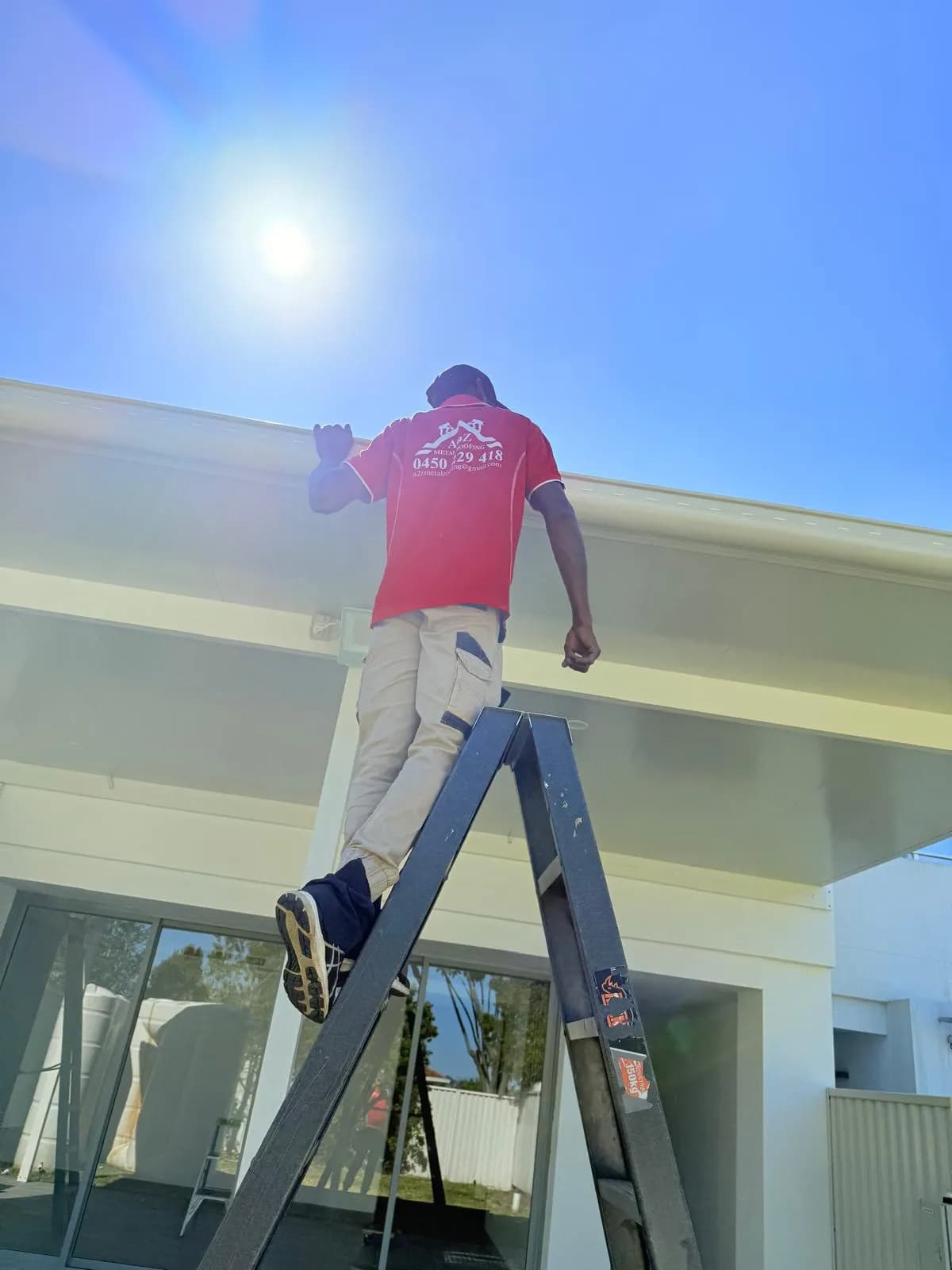
Preventing Roof Leaks: The Essential Guide to Gutters & Downpipes
Over 85% of roof water ingress originates from guttering and flashing failures. Learn how properly engineered roof drainage protects your property.
A pristine metal or tile roof cannot protect your home if the surrounding drainage system is compromised. In Sydney's subtropical climate, sudden heavy downpours can drop over 50mm of rainfall within 30 minutes, testing every millimetre of your gutters and downpipes.
1. The Common Culprits Behind Gutter Failure
- Insufficient Fall: Gutters installed without continuous slope collect stagnant water, promoting premature rust and mosquito breeding.
- Undersized Profiles: Standard shallow quad gutters overflowing during intense downpours and dumping gallons into exterior eaves.
- Unsealed Lap Joins: Aging silicone deteriorating at corners and joins, causing constant dripping along external walls.
- Inadequate Downpipe Capacity: Too few downpipes or downpipes positioned too far from roof valleys where concentrated water accumulates.
2. High-Capacity Profiles: Half-Round vs Slotted Quad
Upgrading to modern high-capacity profiles significantly improves water evacuation:
Half-Round Gutters: With a smooth, curved base, half-round profiles are self-cleaning and allow water to flow with higher velocity, reducing silt and debris accumulation.
Slotted Quad Gutters: Featuring clean front slots, these gutters ensure that if a blockage ever occurs in the downpipe, water overflows safely out the front rather than backing up under your eaves and into interior ceilings.
3. Custom Colorbond Downpipes and Sump Transitions
At A2Z Metal Roofing, we custom fabricate Colorbond steel, copper, or aluminium downpipes with oversized nozzles and clean solder/pop-rivet seals, ensuring maximum stormwater velocity into Sydney council retention tanks or street mains.
Related Articles
Commercial vs Residential Metal Roofing: Key Engineering Differences
From low-pitch concealed fixings to heavy industrial drainage and strict WHS site compliance, discover how commercial roofing demands specialized execution.
Architectural Metal Wall Cladding: Modern Design & Materials
Metal cladding is revolutionizing contemporary Australian architecture. Learn about standing seam, nailstrip, and interlocking facade profiles.